
Russell County Arrest Records
Russell County arrest records are law-enforcement records. They may be tied to a sheriff's arrest, city police action, a citation, a booking event, or a jail hold. The official Russell County Sheriff's Office page identifies the local sheriff channel, while the Kansas Sheriffs' Association confirms the same office and jail admin line in its Russell County directory entry. Those sources are the official starting point for custody and booking questions.
A court charge record is different. It starts when the prosecutor files or approves the charge in court. Russell County Attorney Daniel Krug is named on the official County Attorney page, which says that office evaluates criminal cases from law enforcement agencies and handles felonies, drug crimes, domestic batteries, misdemeanors, juvenile crimes, and traffic prosecutions. Local booking context belongs with inmate records, while the full case file and outcome belong with criminal court records.
The official Sheriff page is one source used for Russell County arrest records and booking context.
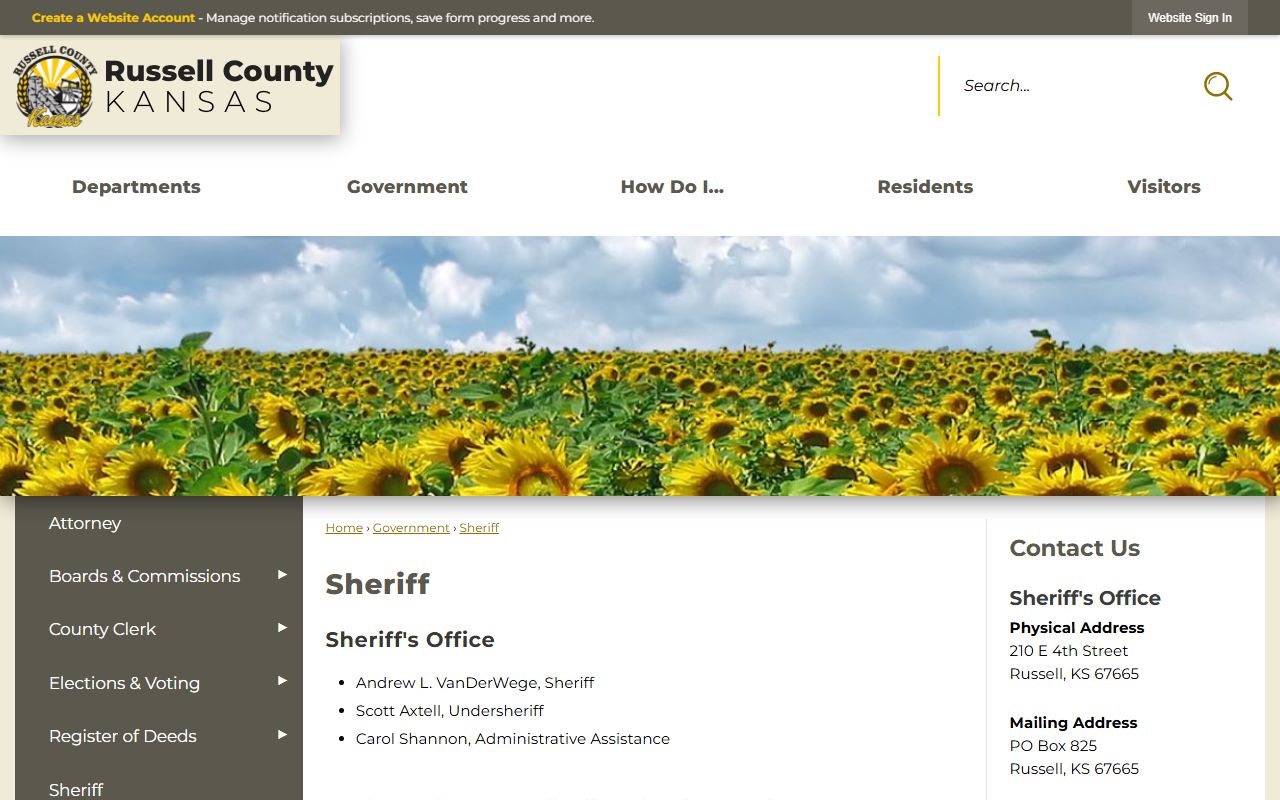
That source helps identify the law-enforcement side before the charge record is checked in court.
Russell County Court Charges
Court charges after arrest are tracked through Kansas court records, not through a mugshot database. Searchers can use Kansas CaseSearch for public District Court case information when the case is available online. Older files, restricted files, certified copies, and documents not shown online may require the Russell County District Court clerk counter or courthouse terminal.
The charge list should be read by count. One arrest can lead to one charge, several charges, no filed charge, a later amended charge, or a municipal citation instead of a District Court criminal case. Municipal Court cases inside the City of Russell may involve ordinance, traffic, and many misdemeanor matters. District Court handles felony cases and other state-law criminal matters.
The Kansas Sheriffs' Association directory also confirms the Russell County law-enforcement contact point for arrest and jail questions.
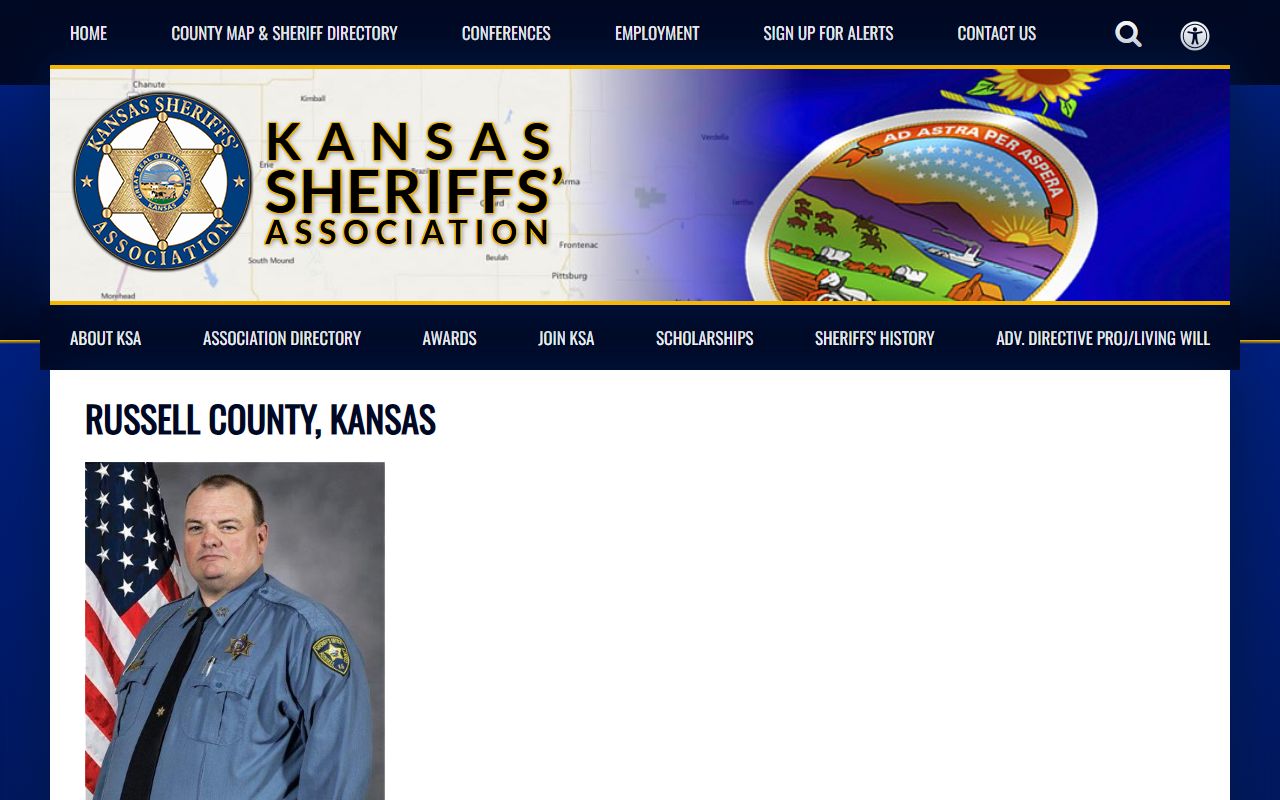
That directory does not replace the court record, but it helps route arrest and custody questions to the proper office.
- Start with the arrest source if the question is custody, booking, or jail status.
- Use Kansas CaseSearch or the District Court clerk for filed criminal charges.
- Call Russell Municipal Court for city ordinance, traffic, and municipal misdemeanor cases.
- Compare the first charge list with later docket entries because charges may change.
Charging Documents
The charging document is the paper or electronic filing that starts the formal court charge record. In Kansas criminal practice, the terms complaint and information appear often. An indictment is less common and is tied to grand jury action. The name matters because it tells the reader who started the charge and where the case sits in the arrest-to-court path.
| Document | Who Files It | What It Does | Russell County Use |
|---|---|---|---|
| Complaint | Law enforcement or prosecutor | Alleges facts and charges to start a case or citation matter. | Common in criminal, traffic, and first-appearance records. |
| Information | Prosecutor | States formal charges the prosecutor elects to pursue. | Used for many District Court criminal prosecutions. |
| Indictment | Grand jury | Accuses a person after grand jury review. | Possible but not the ordinary local route reflected in the research. |
For city police records connected to an arrest or report, the Russell Police Records Management page describes KORA requests, exceptions, a three-business-day response window, and paper copy costs. Police records can be closed when they are criminal investigation records or fall under another exception.
The Russell Police Records Management source is useful when an arrest record begins with a city incident.
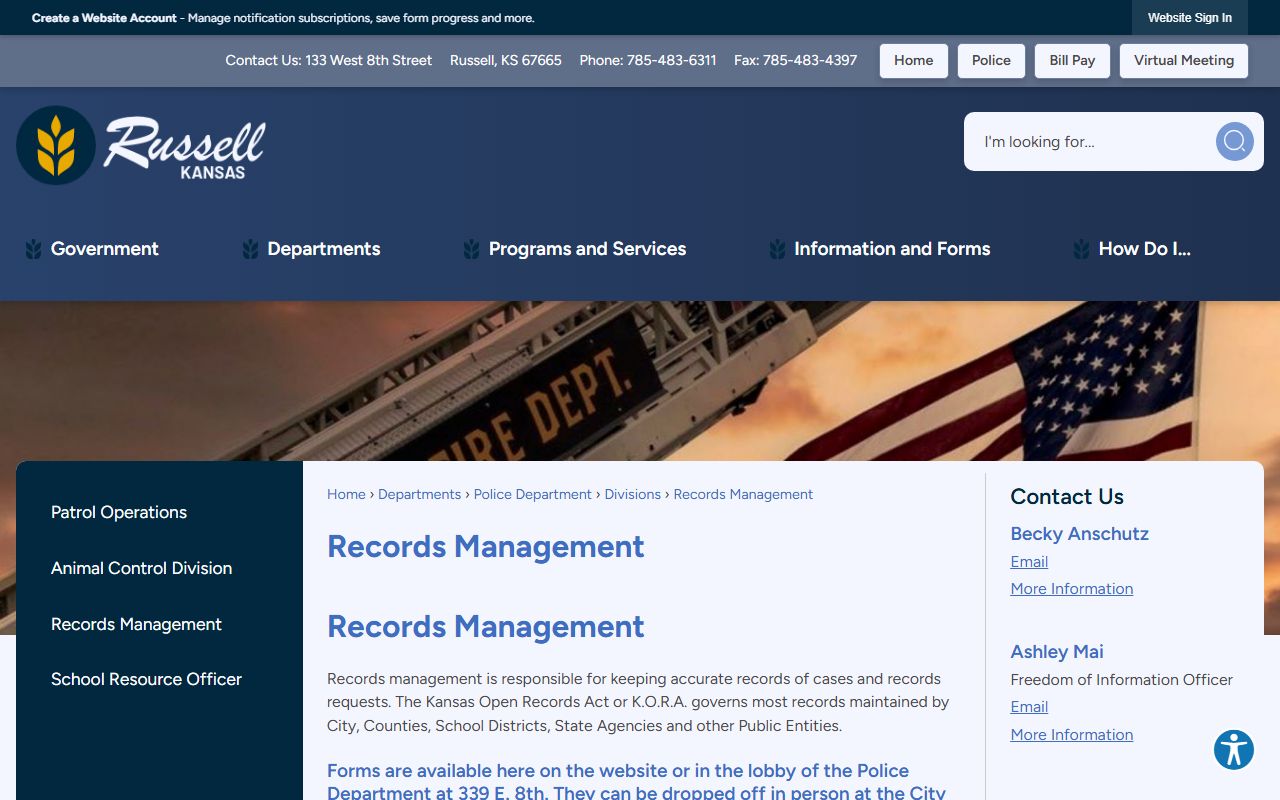
Police KORA access is separate from the prosecutor's filed charge and the court's docket.
Russell County Charge Status
Charge status can change after the first filing. A charge may be pending at first appearance, amended before plea, reduced as part of a diversion or plea discussion, dismissed by the court, or disposed after a plea or trial. A status label does not always tell the whole story, so docket entries and journal entries should be read together.
| Status | Meaning | Where to Verify |
|---|---|---|
| Pending | The charge is still active and no final outcome has been entered. | CaseSearch, District Court, or Municipal Court. |
| Amended or reduced | The original charge changed by prosecutor action, court order, or plea terms. | Docket entries and amended charging documents. |
| Dismissed | The charge was terminated without a conviction on that count. | Dismissal order or final journal entry. |
| Diversion | The prosecutor may allow compliance terms that can avoid conviction if completed. | Prosecutor and court docket, if public. |
| Expunged | Public access is restricted under Kansas expungement law when granted. | Court order and statutory exceptions. |
Note: A dismissed charge may still appear in some court history unless sealed, expunged, or restricted by law.
Charges vs Convictions
A charge is an accusation. A conviction is an outcome after a guilty plea, no contest plea with judgment, jury verdict, bench trial finding, or other final disposition that creates legal guilt. Russell County court charge records should not be read as proof of conviction unless the disposition supports that conclusion.
| Point | Charge | Conviction |
|---|---|---|
| Stage | Filed near the start of the case. | Entered near the end of a count or case. |
| Proof | Based on accusation and probable cause. | Based on plea, verdict, or judgment. |
| Record clue | Appears in complaint, information, citation, or docket. | Appears in disposition, judgment, or sentencing entry. |
| Risk of error | May be amended, reduced, or dismissed. | May still be appealed, corrected, or expunged if eligible. |
Important: Do not use a charge line as a conviction finding unless the court disposition clearly shows guilt or judgment.
State Charge Sources
Some Russell County arrest records and court charge questions require state sources. The Kansas Department of Corrections is useful for sentenced or supervised residents, while the KASPER disclaimer says information is updated each working day and status may change between updates. KASPER is not a local jail booking roster and should not be treated as one.
The KBI Registered Offender Website is a separate registry for persons covered by Kansas offender registration law. It does not show every arrest, every charge, or every conviction. Kansas public access also depends on KORA, Kansas court rules, and record-specific restrictions.
The Kansas Department of Corrections homepage is a state source for custody status after a person enters KDOC supervision.

KDOC information helps after sentencing or supervision, while Russell County court charges still need court verification.
The KASPER disclaimer source is also assigned to Russell County court charge research.
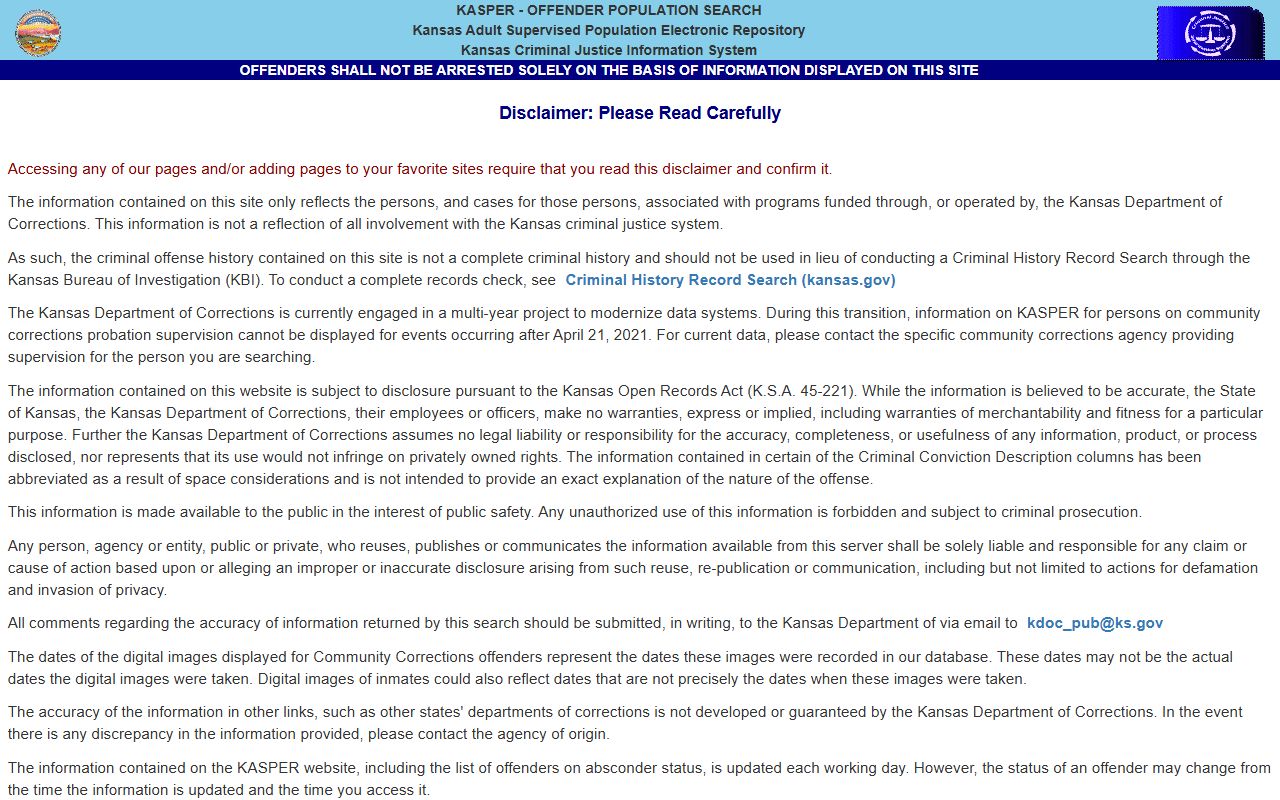
KASPER should be used as a status check for state custody or supervision, not as a complete arrest-record database.
Restricted Charge Records
Some Russell County charge records are not public in the same way as ordinary adult criminal cases. Juvenile offender, child in need of care, juvenile intake, adoption, mental health, sealed, and expunged records can be withheld or redacted. Police criminal investigation records may also be closed under the City of Russell records policy and Kansas law.
Kansas K.S.A. 21-6614 governs expungement of eligible convictions, arrest records, and diversion agreements. An expungement is a court process. It is not a quick edit to a search result. If granted, the record may still be available for certain law-enforcement, licensing, or criminal justice purposes listed by statute.
| Point | Sealed Record | Expunged Record |
|---|---|---|
| Public view | Hidden from ordinary public access by law or order. | Restricted after a granted Kansas expungement petition. |
| Record status | The file still exists but is not open to the public. | The arrest, conviction, or diversion record is limited by statute. |
| Access exceptions | May be seen by authorized court or justice users. | May remain available for specific legal purposes listed by Kansas law. |